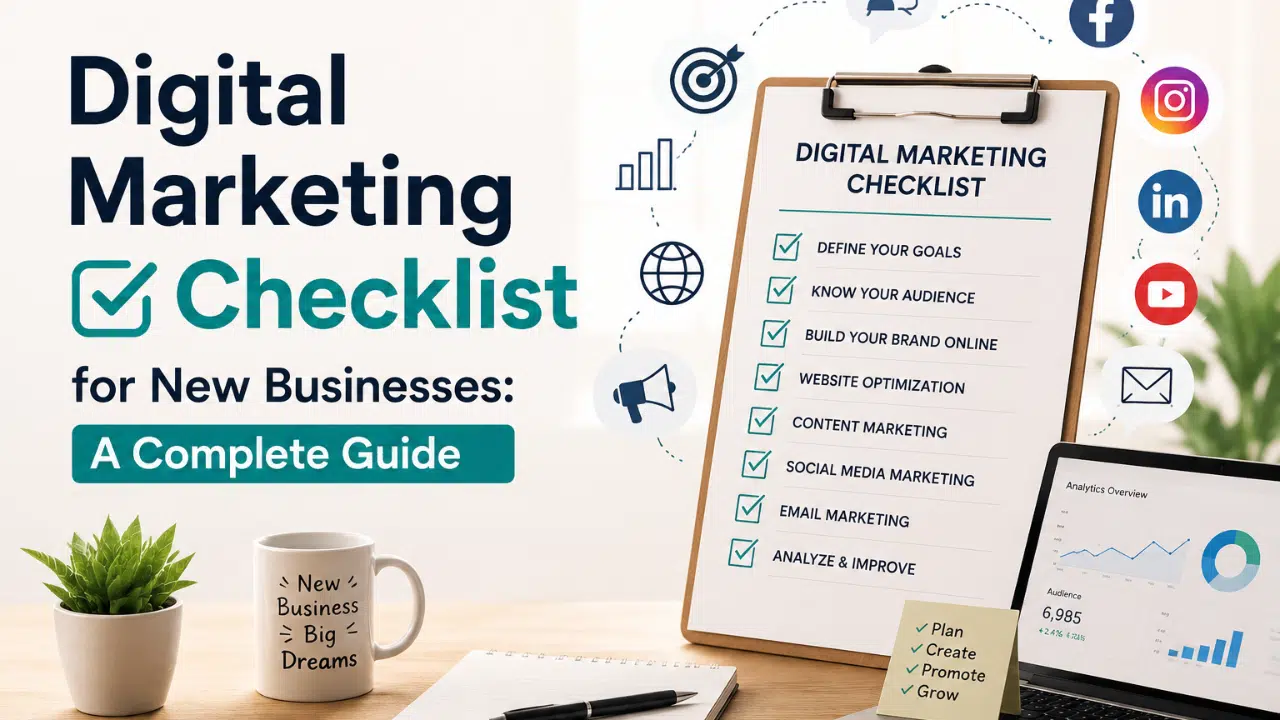
Starting a new business is exciting, but building a strong digital presence can be challenging. Today, customers search online before making purchasing decisions, whether they are looking for a service provider, product, restaurant, healthcare company, or local business. This makes digital marketing an essential part of launching and growing a new business.
The right Digital Marketing Services can help a new business increase visibility, attract potential customers, build credibility, and generate consistent leads. However, many businesses do not know where to start.
This digital marketing checklist for new businesses covers the essential steps you should take to establish a strong online presence and create a foundation for long-term growth.
1. Define Your Target Audience
Before starting any marketing campaign, understand who your ideal customers are.
Ask yourself:
- Who are my ideal customers?
- What problems do they have?
- What services or products are they searching for?
- Where do they spend time online?
- What factors influence their buying decisions?
- Who are my main competitors?
Creating a customer profile helps you develop better content, advertisements, website messaging, and offers.
For example, a local website development company may target small business owners who need professional websites, while a healthcare marketing agency may target doctors, clinics, and hospitals.
Know your audience before you market to them.
2. Build a Professional Website
Your website is often the first major interaction customers have with your business.
A professional website should:
- Clearly explain your products or services
- Have simple and intuitive navigation
- Work properly on mobile devices
- Load quickly
- Include clear calls-to-action
- Display your contact information
- Build trust through testimonials, reviews, or case studies
- Have secure HTTPS
Your website should not simply look attractive. It should also be designed to generate enquiries, leads, and sales.
For a new business, investing in professional website development can create a strong foundation for other Digital Marketing Services, including SEO, social media marketing, and paid advertising.
3. Set Up Google Business Profile
If your business serves a specific city or local area, creating and optimizing a Google Business Profile should be one of your first priorities.
Make sure your profile includes:
- Correct business name
- Business category
- Phone number
- Website
- Address or service area
- Business hours
- High-quality photos
- Business description
- Services or products
Encourage genuine customers to leave reviews and respond professionally to reviews.
An optimized Google Business Profile can improve your visibility when people search for relevant businesses near them.
4. Start Search Engine Optimization (SEO)
SEO helps your website appear in search engine results when potential customers search for relevant terms.
Start by researching keywords related to your business.
For example:
- Digital Marketing Services
- Website Development Services
- SEO Services
- Social Media Marketing
- Digital Marketing Agency
- Website Design Company
Focus on a combination of broad, service-based, and location-specific keywords.
Your basic SEO checklist should include:
- Keyword research
- SEO-friendly page titles
- Meta descriptions
- Proper headings
- Optimized URLs
- Internal linking
- Image optimization
- Mobile optimization
- Technical SEO
- Local SEO
SEO is a long-term strategy, so businesses should focus on creating useful content and improving their website consistently rather than expecting instant results.
5. Create Social Media Profiles
Social media allows new businesses to build awareness and communicate directly with their audience.
Choose platforms based on where your customers are most active. Depending on your business, this may include Instagram, Facebook, LinkedIn, YouTube, or other platforms.
Complete your profile with:
- Professional logo
- Business description
- Website link
- Contact details
- Location
- Relevant keywords
- Consistent branding
Then create a content plan covering educational, promotional, informational, and engaging content.
Consistency is more important than simply posting every day.
6. Develop a Content Marketing Strategy
Content marketing helps businesses educate their audience while building authority and trust.
A new business can start with:
- Blog articles
- Social media posts
- Reels and short videos
- Infographics
- FAQs
- Case studies
- Guides
- Customer success stories
For example, if your business provides Digital Marketing Services, you could publish articles about SEO, social media marketing, Google Business Profile optimization, website development, and lead generation.
Useful content can also support SEO by helping your website rank for relevant search queries.
7. Set Up Email Marketing
Email marketing is another valuable tool for building long-term customer relationships.
Create a system to collect leads through your website using forms, enquiries, downloads, or newsletter subscriptions.
You can then send:
- Welcome emails
- Business updates
- Educational content
- Special offers
- Product or service announcements
- Follow-up emails
Avoid sending unnecessary promotional emails. Focus on providing useful information and creating value for subscribers.
8. Consider Paid Advertising
Organic marketing takes time. Paid advertising can help new businesses reach potential customers faster.
Depending on your target audience, you can consider:
- Google Ads
- Meta Ads
- LinkedIn Ads
- YouTube Ads
- Local advertising campaigns
Before spending money, define your campaign objective.
Are you trying to generate:
Leads → Enquiries → Appointments → Sales?
Track your advertising performance and optimize campaigns based on actual results rather than impressions alone.
9. Set Up Analytics and Tracking
One of the biggest mistakes new businesses make is marketing without measuring results.
Set up analytics and tracking tools to understand:
- Website visitors
- Traffic sources
- Popular pages
- User behaviour
- Leads
- Conversions
- Advertising performance
You should know which marketing channels are generating actual business results.
For example, if social media generates 5,000 views but Google Search generates 20 qualified enquiries, your marketing strategy should reflect that difference.
What gets measured can be improved.
10. Manage Your Online Reputation
Customers want to know whether they can trust a new business.
Build credibility through:
- Genuine customer reviews
- Testimonials
- Case studies
- Professional social media profiles
- Consistent business information
- Quality website content
Always respond to customer feedback professionally, including negative reviews.
Never purchase fake reviews. Authentic customer experiences are much more valuable for long-term reputation building.
11. Create a Lead Follow-Up Process
Getting leads is only half the job.
Your business should have a clear process for following up with potential customers.
For every lead, track:
- Name
- Contact information
- Requirement
- Source of the lead
- Follow-up date
- Lead status
- Final outcome
A simple CRM or organized spreadsheet can help your sales team avoid losing potential customers.
Quick and professional follow-up can make a significant difference in conversion rates.
12. Review and Improve Your Strategy
Digital marketing is not a one-time activity.
Every month, review:
- Website traffic
- Search rankings
- Leads generated
- Social media engagement
- Ad performance
- Conversion rates
- Cost per lead
- Best-performing content
Identify what is working and what needs improvement.
Your strategy should evolve as your business, audience, competitors, and market change.
Final Digital Marketing Checklist
Before launching your marketing strategy, make sure you have:
✅ Defined your target audience
✅ Built a professional website
✅ Created and optimized your Google Business Profile
✅ Researched relevant keywords
✅ Started SEO
✅ Created social media profiles
✅ Developed a content strategy
✅ Set up email marketing
✅ Planned paid advertising
✅ Installed analytics and conversion tracking
✅ Started reputation management
✅ Created a lead follow-up process
✅ Established monthly performance reporting
Conclusion
Building a digital presence can feel overwhelming when you’re starting a new business, but you don’t have to do everything at once. Start with the fundamentals: a professional website, clear branding, SEO, Google Business Profile, social media, useful content, and proper tracking.
The right Digital Marketing Services can help you build these foundations, reach the right audience, generate qualified leads, and create sustainable online growth.
For new businesses, digital marketing is not simply about getting more website visitors. It’s about turning online visibility into real business opportunities.
About SEO Web Technology
SEO Web Technology helps businesses strengthen their online presence through website development, SEO, digital marketing, social media marketing, and other online growth solutions. Our goal is to help businesses build a professional digital presence that attracts customers and supports measurable growth.
Ready to build your digital presence? Get started with the right Digital Marketing Services for your business.