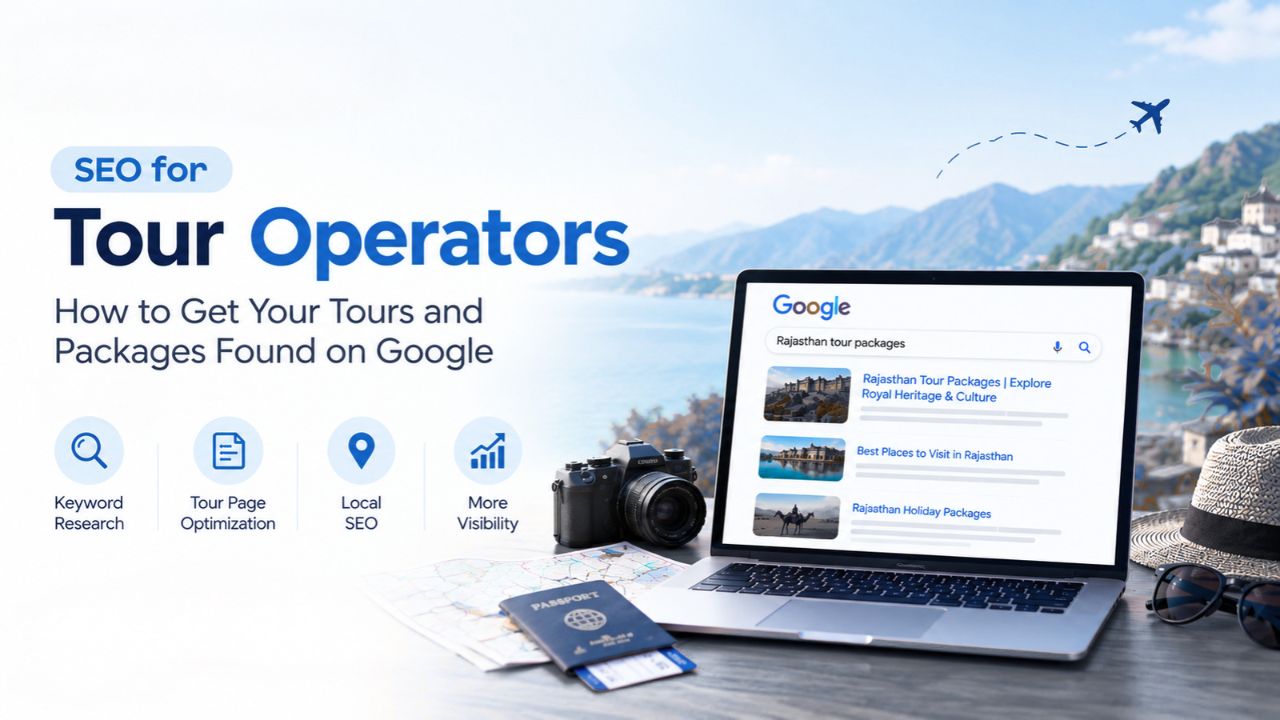
The travel industry is highly competitive, and travellers often turn to Google before choosing a destination, comparing tour packages, or booking their next holiday. If your travel business does not appear in relevant search results, potential customers may book with competitors instead.
This is where Search Engine Optimization (SEO) becomes valuable. SEO helps tour operators improve their website’s visibility, attract travellers who are actively searching for experiences, and generate more direct enquiries and bookings.
Whether you offer adventure tours, family holidays, honeymoon packages, group trips, or customized travel experiences, a well-planned SEO strategy can help your business reach the right audience.
In this guide, we will explain how tour operators can improve Google visibility and attract more potential customers through practical SEO techniques.
1. Target the Right Travel Keywords
Keyword research helps you understand what travellers search for when planning a trip. Instead of targeting only broad terms such as “tour packages,” focus on specific keywords related to your destinations, services, and customer needs.
For example, a travel business might target:
- Rajasthan tour packages
- Family holiday packages in India
- Golden Triangle tour package
- Customized honeymoon packages
- Adventure tours in Himachal Pradesh
- Weekend trips from Delhi
These keywords help connect your website with travellers who have a clearer idea of what they want.
How to find the best keywords
Use Google Keyword Planner, Google Search Console, and relevant SEO tools to discover search terms and identify opportunities. Check competitor websites to understand which destinations and travel experiences they cover.
Also consider search intent. Someone searching for “best places to visit in Jaipur” may be researching a destination, while someone searching for “Jaipur tour package with hotel” may be closer to booking.
Tip: Create separate, useful pages for your main destinations and tour categories instead of trying to rank one page for every travel-related keyword.
2. Create Dedicated Pages for Your Tour Packages
One of the most important SEO improvements for tour operators is creating dedicated pages for individual packages and experiences.
If all your tours appear on a single page with limited details, Google and potential customers may struggle to understand what makes each offering different.
A well-optimized tour page should include:
- A clear tour name and destination.
- Tour duration and itinerary.
- Package inclusions and exclusions.
- Accommodation and transport details, where applicable.
- Pricing or clear information about how to request a quote.
- Suitable photographs and useful travel information.
- FAQs about the tour.
- A visible enquiry or booking button.
For example, instead of using a generic page titled “Our Packages,” create a dedicated page for “5-Day Jaipur and Udaipur Tour Package.”
Make each page genuinely useful and unique. Avoid copying the same description across multiple packages with only the destination name changed.
3. Optimize Your Website’s On-Page SEO
On-page SEO helps search engines understand your pages and helps travellers find relevant information quickly.
Important elements to optimize
Title tags: Write descriptive titles that include your main keyword naturally.
Example: Rajasthan Tour Packages | Customized Holidays in Rajasthan
Meta descriptions: Summarize the tour and highlight what makes it appealing. A useful description can encourage travellers to visit your website from search results.
Headings: Use clear H1, H2, and H3 headings to organize destinations, itineraries, inclusions, and travel information.
URLs: Keep URLs simple and descriptive, such as:
yourwebsite.com/rajasthan-tour-packages/
Image optimization: Compress images to improve loading speed and use descriptive filenames and alt text.
Internal links: Link destination guides to relevant tour packages. For example, a blog about visiting Jaipur can link to your Jaipur holiday package page.
These improvements make your website easier to navigate and help search engines understand the relationship between your content and services.
4. Improve Your Website Speed and Mobile Experience
Many travellers research holidays using their smartphones. If your website loads slowly, displays poorly on mobile devices, or makes enquiries difficult, visitors may leave before exploring your packages.
A fast, mobile-friendly website supports a better user experience and helps visitors move from research to enquiry.
Focus on these improvements:
- Use responsive website design.
- Compress large travel photographs.
- Remove unnecessary scripts and plugins.
- Enable suitable caching.
- Use reliable website hosting and HTTPS.
- Make booking forms short and easy to complete.
- Display contact details and enquiry buttons clearly.
Monitor your website using Google PageSpeed Insights and Google Search Console. Review Core Web Vitals to identify performance issues affecting the user experience.
Remember that website speed alone does not guarantee higher rankings. It should be part of a broader SEO and website quality strategy.
5. Use Local SEO to Attract Nearby Travellers
Local SEO can help tour operators connect with people searching for travel agencies or tour services in a specific city.
For example, a traveller might search for “tour operator in Delhi” or “travel agency in Jaipur.”
To improve your local visibility:
- Create or update your eligible Google Business Profile.
- Keep your business name, address, phone number, and operating hours accurate.
- Select appropriate business categories.
- Add genuine photographs of your office, tours, and travel experiences.
- Encourage customers to leave honest reviews.
- Respond professionally to reviews and questions.
- Maintain consistent business information across relevant directories.
If you serve several destinations, create location-specific website pages only when you can provide useful, accurate information about your services in those areas.
Google’s local results depend on factors including relevance, distance, and prominence. Accurate information and a strong customer experience can support visibility, but no particular ranking is guaranteed.
6. Publish Helpful Travel Blogs
Travel blogs allow your website to attract visitors who are still researching destinations and planning their holidays.
Not every traveller starts by searching for a tour package. Many begin with questions about destinations, budgets, itineraries, weather, or activities.
Useful blog topics include:
- Best Places to Visit in Rajasthan in Winter
- How Much Does a Rajasthan Trip Cost?
- Jaipur to Udaipur: Best Travel Options
- A Complete 7-Day Himachal Travel Itinerary
- Best Family Holiday Destinations in India
- What to Pack for an Adventure Tour
Write articles that answer these questions clearly and include practical details. Where relevant, link the article to a suitable tour package.
For example, a guide about a week-long Rajasthan itinerary can link to your Rajasthan tour package page.
Update articles when travel information changes, and verify details such as opening hours, transport options, and entry requirements before publishing.
7. Build Trust with Reviews and Genuine Travel Experiences
Travellers often compare several operators before making a booking. Clear information and genuine customer experiences can help them feel more confident about your business.
Strengthen trust by including:
- Genuine customer reviews and testimonials.
- Real photographs from completed tours, with permission.
- Clear package inclusions and exclusions.
- Transparent cancellation and refund policies.
- Accurate company and contact information.
- Helpful answers to common travel questions.
You can also publish detailed travel stories or case studies showing how you organized a trip for a particular group or family.
Never publish fabricated reviews, misleading claims, or customer photographs without appropriate permission. Trust should be built through real experiences and transparent communication.
8. Earn Relevant Backlinks
Backlinks are links from other websites to your website. Relevant, naturally earned backlinks can support your website’s authority and help people discover your travel business.
Tour operators can work toward earning links by:
- Sharing useful destination guides with travel publications.
- Collaborating with relevant tourism organizations.
- Publishing original travel research or itineraries.
- Contributing expert travel advice to relevant websites.
- Building legitimate partnerships with local attractions and travel businesses.
Focus on relevance and editorial quality rather than the number of links. Avoid buying links or participating in schemes designed to manipulate search rankings.
9. Track SEO Results and Improve Your Strategy
SEO works best when you measure results and make improvements based on real data.
Use Google Search Console to monitor search impressions, clicks, queries, and indexing issues. Google Analytics can help you understand organic traffic and track enquiries or booking-related actions.
Review these questions every month:
- Which tour pages receive the most organic traffic?
- Which keywords bring relevant visitors?
- Which pages receive impressions but few clicks?
- Are visitors submitting enquiry forms or contacting your team?
- Which blog articles generate interest in specific packages?
- Are important pages loading properly on mobile devices?
Use these insights to update content, improve page titles, strengthen internal links, and make booking journeys easier.
The ultimate goal is not simply to increase website traffic. It is to attract travellers who are interested in the experiences your business offers.
Conclusion
SEO helps tour operators reach travellers at different stages of their journey, from discovering destinations to comparing packages and making bookings. By targeting relevant keywords, creating dedicated tour pages, improving website performance, investing in local SEO, and publishing helpful travel content, your business can build stronger search visibility.
Consistent optimization and performance tracking can help you identify opportunities and improve your website over time.
If you need help with travel website optimization, keyword research, content strategy, or technical SEO, SEO WEB Technology can help you develop a practical digital marketing strategy.